

A Beginner’s Guide to Silicone Molds for Cake Decorating: Easy Release Tips & Best Materials
, by Meytal Limony, 10 min reading time
, by Meytal Limony, 10 min reading time
New to silicone molds? This beginner-friendly guide explains the best materials to use, how to release decorations cleanly, and how to get polished cake decorating results with less frustration.

Silicone molds are one of the easiest ways to create beautiful cake decorations at home, but for beginners, they can also be frustrating.
Chocolate can break, modeling paste can stick, and detailed designs do not always come out as cleanly as expected.
The good news is that most of these problems are not caused by the mold itself.
Usually, they come down to choosing the right material, preparing it properly, and knowing how to release it the right way.
Once you understand those basics, silicone molds can help you create polished, professional-looking decorations with far less effort.
If you are completely new to the process, you may also enjoy our guide on how to use our silicone molds for beautiful cake decorations.
Two of the most popular choices are compound chocolate and modeling paste, but they behave very differently.
For chocolate decorations, compound chocolate is usually the best option for beginners.
Unlike regular couverture chocolate, it does not require tempering, so it is much easier to work with if you do not already have experience with chocolate.
For fondant-style decorations, modeling paste is often easier to use than regular fondant.
It is slightly firmer, sets faster, and is less soft, which makes it easier to unmold and better at holding fine details.
If you want to browse ideas, you can explore our silicone molds for chocolate and fondant decorations to see different styles and themes.

This is one of the most common beginner frustrations, but it usually comes down to a few simple causes.
With chocolate, the main issues are:
1. Overheating
2. adding too much thinning agent
3. trying to unmold before the chocolate has fully set.
Any of these can leave the piece too soft, which makes clean release much harder.
With modeling paste, the usual problems are:
1. Softness
2. lack of mold prep
3. pulling the decoration out the wrong way.
Fine details can easily stretch or distort if the paste has not firmed up enough.
The more detailed the mold, the more important it is to let the piece set properly before unmolding.
For beginners, compound chocolate is the easiest place to start.
· Melt it in short microwave intervals of about 10 to 20 seconds at a time to avoid overheating.
Once melted, check the temperature with a thermometer.
Ideally, it should be around 92–93°F, and no more than 98°F.
If the chocolate looks slightly thick or develops an “elephant skin” appearance on a spoon or spatula, it usually means it got too warm.
It is not ruined, just let it set completely again, then remelt it gently.
· Some people add a little neutral oil or Paramount Crystals to thin the chocolate, but this must be done very carefully.
Too much can prevent the chocolate from setting firmly, leaving it slightly soft, harder to unmold, or more likely to break inside the mold.
· Before unmolding, place the mold in the refrigerator for about 10 minutes. Then gently flex the silicone away from the chocolate instead of pulling on the piece itself.

Modeling paste is often easier to release than regular fondant because it is firmer and sets faster.
· Before filling the mold, lightly dust it with cornstarch or apply a very thin layer of white vegetable shortening.
Only a light coating is needed, but it can make a big difference in clean release.
· After filling the mold, place it in the freezer for about 10 minutes.
When it is time to unmold, pull the silicone mold away from the paste rather than pulling the paste out of the mold.
This helps prevent stretching, tearing, and distortion, especially in delicate designs.
If you are just getting started, modeling paste and compound chocolate are often the easiest materials to use.
Both can produce clean, detailed results and are much more beginner-friendly than softer fondant or regular couverture chocolate.
You can explore some of our beginner-friendly cake decorating molds or browse themed designs like
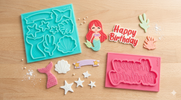
mermaid molds, astronaut molds, bear molds, and princess molds for inspiration.


You do not need sculpting skills to get beautiful results!
One of the best things about silicone molds is that they make detailed cake decorating much more accessible.
You do not need to sculpt every figure by hand or spend hours trying to perfect tiny details.
With the right mold and material, even beginners can create decorations that look neat, polished, and celebration-ready.
If you would like more inspiration, take a look at our post on easy chocolate and fondant theme cake decorations without sculpting skills.
Ready to start decorating? Browse our handmade silicone molds for cake decorating and discover beginner-friendly designs for chocolate, modeling paste, and themed cake toppers.